When to Expand Your ICP Beyond the First Beachhead
Expand your ICP beyond the first beachhead when the beachhead is won, not merely working: matched accounts close at a steady rate across consecutive cohorts, someone other than the founder can close them, customers keep paying and few reachable accounts remain. For founders around launch, the next step is one adjacent segment that keeps the trigger and the buyer, tested as a capped batch. The main constraint is how few closed deals you can compare.
The outcome and observation window
This guide is for founders before or just after launch who already sell to one narrow segment and are asking whether to add a second. If you have not picked the first segment yet, start with how to choose your first ideal customer profile. If the current profile does not sort won deals from lost ones, the diagnosis in why your ICP is too broad to guide sales comes first. This guide answers a later question: what to measure to know the beachhead is won, and how to test one adjacent segment without losing the first.
Expansion is a decision about evidence, not ambition. Write the outcome down before you look at any numbers. The beachhead is won when matched accounts close at a steady rate, someone other than the founder can close them, customers keep paying and the reachable accounts that remain are running out. Then fix an observation window, such as the next two or three monthly cohorts of outreach, and agree in advance which result means continue, change or stop. Thresholds chosen after the data arrives turn any result into a reason to expand.
The pillar guide on how to build a startup go-to-market strategy by stage sets the principle of narrowing first and widening with evidence. This guide turns that principle into indicators you can count and a matrix for the candidate segment.
Four signals that the beachhead is won
Each signal comes from your own pipeline and customer records. None of them is a benchmark; the thresholds are yours to set before the window opens.
| Signal | What to count | What it rules out |
|---|---|---|
| Repeatable close | Share of matched accounts that become paying customers, cohort by cohort | An early run of luck that does not repeat |
| Founder-independent close | Deals closed by someone other than the founder using the written process | A segment that buys only from the founder |
| Retention | Customers still paying at the end of each period, and why any left | Wins that leave before they repay the effort of selling them |
| Remaining reachable accounts | Matched accounts not yet contacted, against all matched accounts you can identify | Expanding while the beachhead still has room |
Daniel's go-to-market page describes the last step of his process as a weekly review, in his words: 'Replies, meetings, opportunities, objections, and next steps tracked by account. The weekly read refines the ICP, the positioning, the sales collateral, and the roadmap.' That is his own description of how he works, and it is the kind of record these signals need. The same page says one of the places founders get go-to-market wrong is 'Scaling outreach volume before a single message has earned a reply.' Adding a segment before the first one shows these signals is a version of the same mistake.
The fourth signal needs a count of the segment. For US segments defined by industry and place, the Census Bureau's County Business Patterns program provides annual statistics for establishments with paid employees, presented by geographic area, industry detail and employment size of the establishment. Its about page currently carries a notice that the information on the page is no longer current while the Bureau evaluates how to comply with a Commerce Department order prohibiting noise infusion, so check the latest release notes before relying on a figure. County Business Patterns does not cover businesses without paid employees. For those, the Census Bureau's Nonemployer Statistics cover businesses that have no paid employees, are subject to federal income taxes and have receipts of $1,000 or more, with a $1 threshold for the construction sector, and report the number of establishments and total receipts by industry and area. If your beachhead is mostly owner-run shops, the nonemployer count may matter more than the employer count.
Divide the matched accounts you have contacted by the matched accounts you can identify. A beachhead where most identifiable accounts have heard from you, and the rest decline for the same reason, is running out. One where most have not heard from you is not running out, however slow the last month felt. Public counts show how many accounts exist, not how many match your trigger, so treat them as a ceiling and count matches from your own research.
The ICP expansion matrix: change one term at a time
An ICP is a set of terms: the buying trigger, the buyer role, the budget the problem already draws on, delivery fit and the channel that reaches the account. An adjacent segment differs from the beachhead in one of these terms and keeps the rest. Change one term, and a good result tells you which term travels. Change several, and a bad result cannot tell you which one broke. The expansion matrix records each candidate segment against the beachhead, one row per term.
| Column | What to record | How to read it |
|---|---|---|
| Term | Trigger, buyer role, budget, delivery fit and channel, one per row | Keep the beachhead's own wording so differences stand out |
| Beachhead value | What the won accounts share, from your own records | Use the narrowed ICP statement, not the original pitch |
| Candidate value | The same term for the adjacent segment | Write it from accounts you have spoken to or observed, not from a market report |
| Same or changed | Whether the candidate matches the beachhead on this term | A candidate with more than one changed term is not adjacent yet |
| Evidence | Said, seen, done or assumed | An assumed match counts as changed until checked |
| Review trigger | The result that would make you pause or drop the candidate | Write it before the test starts |
Rank candidates first by how many terms they keep, then by how much of the evidence is seen or done rather than said or assumed. Use the same said, seen, done and assumed labels as the customer interview notes template, and keep the beachhead's record in the format of the ICP template so the two can be compared line by line.
Observable buying trigger: definitions and evidence
The trigger is the term to hold fixed first, because it tells you when to call as well as whom. A trigger is the event that makes the problem urgent now, such as hiring, a new location or a regulation taking effect. For the candidate segment, look for the same public trace that worked in the beachhead and check how often it appears before first contact. If the beachhead trigger was a job posting, look for the same kind of posting among candidate accounts.
Evidence that the trigger travels: candidate accounts that show the trace reach a first meeting more often than candidate accounts that do not, and in conversation they describe the same chain from event to problem. Evidence that it does not: the trace appears, but the event did not create the problem you solve. If candidate accounts describe a different event, the segment may still be worth testing, but it is a new trigger with its own test, not an extension of the old one.
Specific buyer role: comparison and caveats
Compare the person who approved the purchase in the beachhead with the person who would approve it in the candidate segment, using the job titles the accounts use themselves. Daniel's go-to-market page describes the first step of his process as 'One segment, one moment that makes them buy, and the exact job title that signs.' The caveat is that a matching title can hide a different approval path. An owner who signs alone and an owner who needs a partner or a head office to agree are different buyers with the same title, so ask who else must agree before you mark the role as unchanged.
A changed buyer is the most expensive term to change, because it usually changes the pitch, the length of the sales cycle and the proof the buyer asks for. If the only candidate with a shared trigger also changes the buyer, treat it as a new ICP decision and run it through the selection method for a first ICP rather than as a quick test.
Budget and delivery fit: scenarios and review triggers
Budget fit asks whether candidate accounts already pay for the problem, in money or in paid hours. Delivery fit asks whether the product works for them as it is. Three scenarios are worth separating:
- Same budget, same delivery. Candidate accounts pay for the same workaround and need nothing new. This is the cleanest adjacent test.
- Same budget, new delivery need. They pay for the problem but need a feature, an integration or a setup the beachhead did not ask for. Estimate the build before the test; if it is large, the test measures your roadmap rather than the segment.
- New budget. They solve the problem for free today, or the spend sits with a different department. Price and buyer will likely change too, so the candidate is not adjacent.
Write review triggers for the test before it starts: a delivery request that appears in several candidate deals and in none of the beachhead deals, a price objection beachhead buyers did not voice, or a drop in the beachhead's own close rate while the team splits its attention. Any of them means pausing the candidate and revisiting its row in the matrix.
A hypothetical expansion test from moving crews
The following is a hypothetical example with invented details. It illustrates the method and does not describe a real company, customer or measured result.
A founder sells a crew scheduling and on-site quoting app. The beachhead ICP reads: residential moving companies in one metro area with two to six crews, where the owner dispatches and signs, that posted a mover job in the 90 days before first contact and that pay an office worker to build the week's schedule. Over the past three months the founder ran outreach in monthly cohorts of matched accounts. In those three cohorts, 9 of 30, 8 of 28 and 10 of 31 accounts became paying customers. A salesperson hired in the third month closed 6 of the 10 deals in the latest cohort with the written process. Of the 27 customers, 25 still pay. The founder can identify about 140 residential movers in the metro and has contacted 89; of the 51 left, about 35 run a single crew and fall outside the ICP.
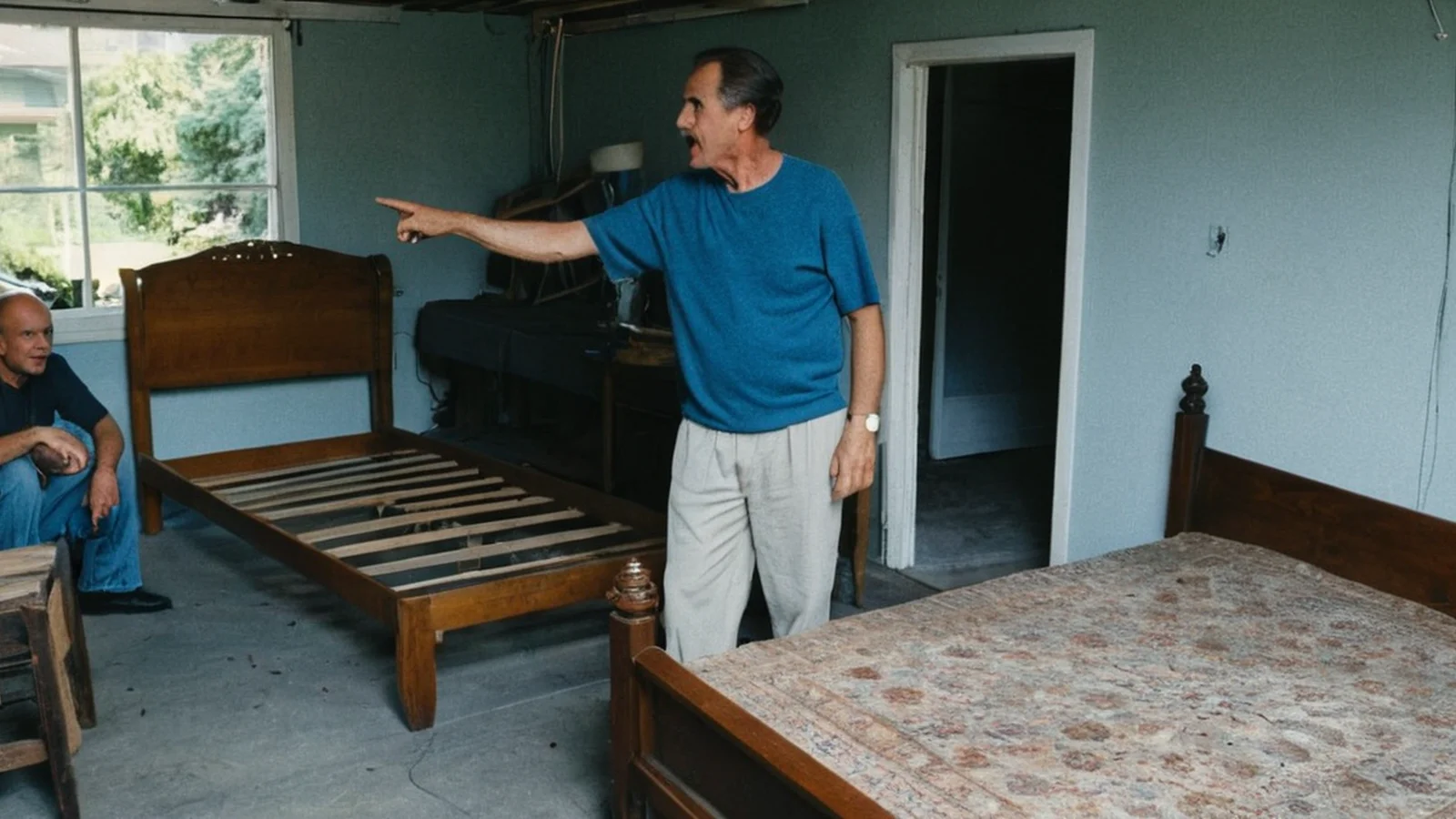
On a ride-along with a junk removal owner who had asked for a demo, the founder watches the owner stand in a homeowner's open garage, point at an old armchair, a rolled carpet and a bed frame, and price the load by how much of the truck it will fill before the crew carries anything out. It is the same crew-and-truck day the moving customers run, except that the job was quoted on the spot that morning rather than booked a week ahead. The founder fills the expansion matrix for three candidate segments:
| Term | Beachhead: residential movers | Junk removal | Commercial office movers | Self-storage facilities |
|---|---|---|---|---|
| Trigger | Posted a mover job in the 90 days before first contact | Same: crew job posted, seen at 7 of 12 accounts checked | Changed: won a large relocation contract, said at 3 accounts | Changed: opening a new facility, assumed |
| Buyer role | Owner dispatches and signs | Same: owner signs, said on 5 of 6 calls | Changed: operations director approves, said | Changed: regional manager approves, assumed |
| Budget | Office worker paid to build the schedule | Same: part-time dispatcher paid to schedule, said | Same: paid move coordinator, said | Changed: no scheduling spend, assumed |
| Delivery fit | Booked jobs on a crew calendar | Changed: same-day quotes priced by truck volume, seen on the ride-along | Changed: multi-day project plans, assumed | Changed: unit rentals rather than crews, seen |
| Channel | Owner referrals and a local trade group | Same: members of the same trade group, seen | Changed: bids through property managers, said | Changed: corporate procurement, assumed |
| Terms changed | None | 1 of 5 | 4 of 5 | 5 of 5 |
The founder reads the four signals first. Close rates held across three cohorts, someone other than the founder closed most of the latest deals and 25 of 27 customers still pay, so the beachhead is won. With about 16 matched movers left to contact, it is also running out. Junk removal changes only delivery fit, and the change is a volume price list the founder estimates at two weeks of work. Office movers and self-storage change too many terms to read as one test, so both are parked.
The decision is to finish the remaining matched movers and run a capped junk removal test alongside them: 20 junk removal companies in the metro with a crew job posted in the past 90 days, over the next six weeks. The thresholds are written down in advance: continue if at least 5 of the 20 pay, stop if fewer than 3 pay, and treat anything between as a change that needs a rewritten row and a smaller rerun. The review triggers are a price list that takes more than a month to build, or fewer than 4 of the 16 remaining matched movers paying. The assumptions are written down too: that a crew job posting signals growth rather than staff turnover, that one ride-along represents other junk removal owners, and that early referrals did not inflate the beachhead close rate.
Decide what to continue, change, or stop
At the end of the window, read the candidate test against the thresholds you wrote down and pick one of three outcomes:
- Continue. The candidate closes at a rate near the beachhead's, through the same buyer, without delivery work beyond what was planned. Add it to the ICP as a second segment with its own record, and only then consider the next candidate.
- Change. Accounts buy, but for a reason or through a buyer the matrix did not predict. Rewrite the candidate's row from what happened and rerun a smaller test before counting the segment as won.
- Stop. The candidate misses the threshold or a review trigger fires. Park it with the reason, and return to the beachhead or to the next candidate that changes one term.
Whatever the outcome, check the beachhead's own signals for the same window. An expansion that grows the pipeline while the beachhead's close rate falls has moved the problem rather than solved it.
Common mistakes and limits
- Expanding because the list feels short. Count the remaining matched accounts before deciding the beachhead is exhausted.
- Changing several terms at once. A failed test then cannot show which term broke.
- Counting founder-closed deals as repeatable. If only the founder can close, the next segment will need the founder too.
- Setting thresholds after the results. Any result then looks like a reason to expand.
- Letting the beachhead drift. Splitting a small team across two segments can slow both.
The method has limits. With few closed deals, a difference between cohorts can be chance, so treat every reading as a hypothesis for the next window. It suits products sold to identifiable organizations with an approval path; self-serve and consumer products depend more on usage and purchase data. The expansion matrix, the four signals and the reading rules are an editorial framework, not a measured result.
Related guides and next step
- Choosing the first segment: How to Choose Your First Ideal Customer Profile
- Narrowing from customer evidence: How to Turn Customer Evidence Into a Narrow ICP
- Writing a segment on one page: ICP Template: Buyer, Trigger, Budget, and Current Alternative
- Diagnosing a profile that does not sort deals: Why Your ICP Is Too Broad to Guide Sales
- Placing the ICP in a wider plan: How to Build a Startup Go-to-Market Strategy by Stage
Bring your expansion matrix, your cohort records and the candidate segment you are weighing to a free 30-minute strategy session to review your ideal customer profile decision with your actual evidence and constraints.
Frequently asked questions
When should you expand your ICP beyond the first beachhead?
When the beachhead is won rather than merely working: matched accounts close at a steady rate across consecutive cohorts, someone other than the founder can close them, customers keep paying and few reachable accounts remain uncontacted. Then test one adjacent segment that changes only one term of the ICP, as a capped batch with thresholds set in advance.
What evidence should a founder collect before expanding an ideal customer profile?
Close rates by monthly cohort, the share of deals closed by someone other than the founder, which customers still pay and why any left, and a count of matched accounts in the segment against those already contacted. For each candidate segment, record its trigger, buyer role, budget, delivery fit and channel, each tagged as said, seen, done or assumed.
What are common mistakes when expanding an ideal customer profile?
Expanding because the list feels short without counting the accounts left, changing several ICP terms at once so a failed test cannot be read, treating founder-closed deals as repeatable, setting thresholds after the results arrive, and letting the beachhead's own close rate slip while attention moves to the new segment.
What makes a customer segment adjacent to your beachhead?
It differs from the beachhead in one term and keeps the others. A segment that shares the trigger, the buyer role, the budget and the channel but needs a small delivery change is adjacent. One that changes the buyer or the budget is closer to a new ICP decision and needs its own selection process.