Case study 02, hardware
Selling hardware to couriers, police forces, and armies
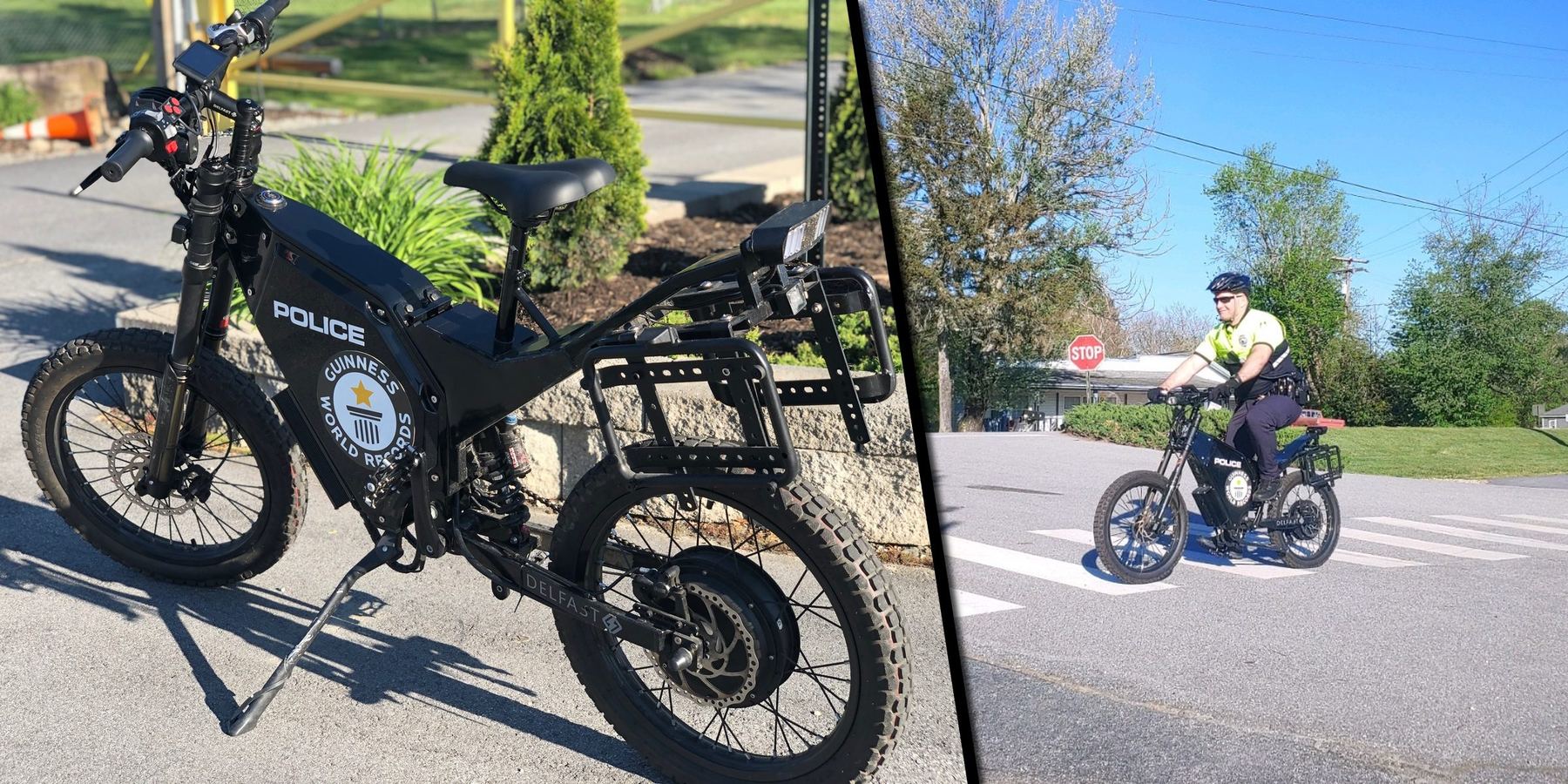
The TopCop, built for police fleets. The Guinness World Records badge on the frame was a sales instrument, not a decoration.
I built Delfast's long-range electric bike business and its go-to-market process from scratch, targeting couriers, logistics operators, police departments, and military customers. I personally handled enterprise and government opportunities ranging from five to seven figures, from initial outreach and product demonstrations through negotiations and delivery.
01The ICP came from being the customer
I did not find this market in a report. I found it by running my own courier company and being unable to buy a bike that survived a working day. That gave me the ICP already defined: I knew the job, the failure modes, and what a failure cost, because I had paid for it.
So the first ICP was couriers and logistics operators, people who needed range, ruggedness, and low running cost rather than a weekend toy. From there the adjacent buyers were obvious, because they needed the same three things for different reasons: delivery platforms, police departments, and eventually military users.
02Records as sales collateral
A Ukrainian hardware startup has no brand permission with a procurement department. The records bought that permission.
Before any of the records, we raced. Delfast won the European Electric Marathon two years running, taking gold in the electric bike stage in 2015 on the Kyiv to Monte-Carlo route and again in 2016 from Lviv to Monte-Carlo. Winning a European endurance race twice is what let us say "longest range" to a buyer without it sounding like marketing.
In October 2017 a Delfast Prime set the Guinness World Record for the greatest distance travelled on an electric bicycle on a single charge: 367 km, or 228 miles, ridden by Vitalii Arhipkin at the Kyiv velodrome. In August 2021 our Dnepr electric motorcycle set a speed record at the Bonneville Salt Flats at 107 mph. Forbes named the Delfast Top 3.0 the fastest electric bike in 2021 and again in 2022.
None of that was vanity. Every enterprise and government outreach message led with one of those proofs, because a buyer could verify a record in ten seconds without having to trust me first. It shortened the trust step of the sale from months to a single email.
03Product line as segmentation
Seven SKUs, one per segment. Partner for couriers, Prime for range, Top for speed, Trike for cargo, TopCop purpose-built for police, California for the US consumer market, Dnepr for the halo. Early consumer pricing ran from about $3,000 to $5,000 across the tiers, and enterprise SKUs were priced and configured against the job rather than against a spec sheet.
A police buyer reading "TopCop" already knows the product was built for them, before a single specification is discussed.
04Running enterprise and government cycles personally
The motion was the same regardless of who the buyer was: outreach, demonstration, pilot with agreed success criteria, negotiation, delivery. A demo unit in the buyer's hands beat any deck, so we built a formal demo program around it.
Law enforcement and defense: the LAPD, the US Air Force, police forces in Mexico, a police department in Brevard, North Carolina, and the Ukrainian armed forces, whose deployment drew coverage from Bloomberg and The Washington Post.
Delivery and logistics: Uber Eats, DoorDash, and in Europe Wolt, Bolt and Glovo. Every one of them was buying the same thing: a machine that survives a full shift and costs almost nothing to run.
05Building a channel without owning inventory everywhere
Direct sales do not scale across 40 countries, and neither does a founder. I built a two-tier US channel from zero: 24 authorized dealers and 22 dropship partners across 10 states, on a 30% dealer margin, with protected territories, anti-stacking rules on promotions, and a strict price-parity policy so the channel and our own site never undercut each other.
The dealers doubled as the local service and fulfillment layer for the enterprise accounts I closed personally. That is why the two motions reinforced each other instead of competing: the channel made my direct deals deliverable, and my direct deals gave the channel proof.
06Capital raised on the same proof
The first money in was $40,000 from Kyiv angels plus $200,000 from the Imperious Group fund. Then the crowd: a Kickstarter campaign that raised $165,800 from 75 backers against a $50,000 goal, which also built the early list, and a $3.4M equity crowdfunding round on Fundable with 300 investors, which funded the move to owned manufacturing.
Note the order. The record came first, the press came from the record, the crowd came from the press, and the institutional money came from the crowd.
07Outcome
The business reached $8.5 million in sales and delivered products to more than 40 countries, from a standing start, in a hardware category with no incumbent brand permission and no domestic market to speak of.
30 minutes. No pitch, no obligations. English, Russian, or Ukrainian.