Case study 01, category creation
A smartphone delivered as quickly as a pizza
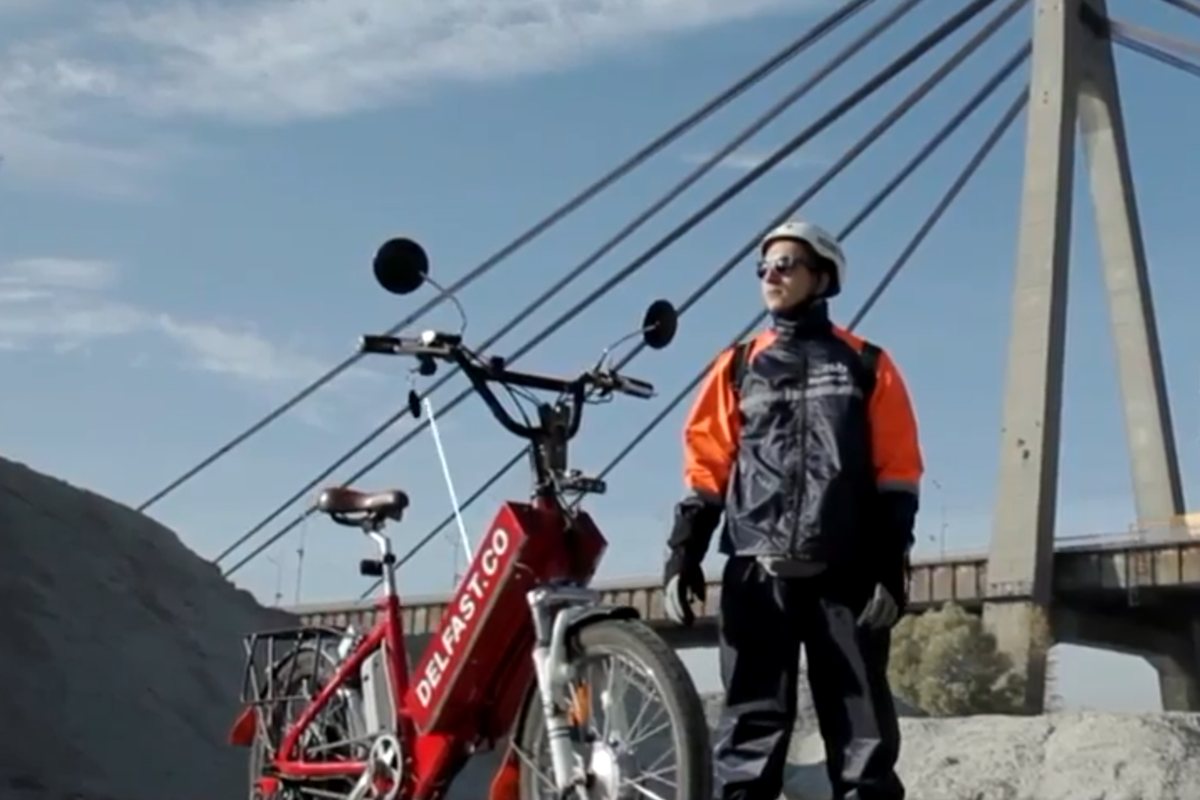
I have built go-to-market from scratch across several companies. Delfast Delivery is the clearest example, because when it started the thing we were selling did not exist as a category.
01The problem, found the hard way
My phone broke. The nearest delivery slot from the online store was two days out. In 2014, that was normal.
So I founded Delfast Delivery in Kyiv with my co-founder Serhiy Denysenko: one-hour delivery for online retailers, run on our own fleet of couriers on electric bikes. The positioning was one sentence: a smartphone delivered as quickly as a pizza. Everybody already understood that pizza arrives in an hour. Nobody had connected that expectation to electronics, documents, or bank cards.
02The ICP shift: from B2C to B2B
We started with consumers at a flat rate per delivery. Discovery told us that was the wrong buyer. Talking directly to online retailers, print shops, and banks, one pattern kept repeating: for a business whose revenue or retention depended on delivery speed, a slow courier cost them customers.
So I moved the company to B2B and defined the ICP precisely: businesses for which delivery speed directly affects revenue or customer retention. Then I found who actually signs inside those companies and ran discovery with them: how the delivery process works today, what a failure costs, what would have to be true for them to change vendor.
Within the first year we were running about 100 orders a day with 30 couriers and 33 bikes, and already serving corporate accounts at more than 25 major online stores including Rozetka, Prom.ua, and Comfy. In February 2015 the courier business raised $250,000 from the venture fund Imperious Group.
03The offer: a one-hour SLA and a pilot with a pass mark
I built the offer around the one thing the buyer could not get anywhere else: a one-hour service level, in writing. Around it went the pricing, the pilot structure, and the success criteria, agreed before the pilot started so that "it went well" was never a matter of opinion.
I acquired the first customers personally and converted the pilots into commercial contracts myself.
04Turning the sale into a system
Once the sale repeated, I wrote it down: pipeline stages, an onboarding workflow, and weekly and monthly reporting, so a pilot converted into a renewal instead of a favor.
A one-hour promise is an operations promise, so I designed the operating system that had to sit underneath it: routing software requirements, courier procedures, safety standards, and delivery handoff rules. Customer objections and pilot results fed straight back into the offer, the operations, and the product.
05Scale mechanism: franchise the playbook
Once the model was standardized, the fastest way to scale it was to let other operators run it. We packaged the brand, the pricing, the SLA, the operating procedures, and the sales process, and expanded to 10 cities across Ukraine, Kazakhstan, and Poland: one company-owned operation and nine franchises, together signing more than 700 B2B contracts.
The business reached its first paying customer within three months and broke even one month after launch. Both numbers proved the unit economics before we scaled the franchise.
06The second business hiding inside the first
Our couriers needed a bike that could work a full day without recharging, and nothing on the market survived professional courier duty. So we built our own. Then the customers of the courier service started asking to buy the bikes the couriers rode, and by 2017 we opened a production line and sold the first fifty units.
We deliberately did not chase it. As late as 2020 our own investor decks still said, in capital letters, that we were a courier service and we did not sell e-bikes. That second business is its own case study.
07Outcome
In December 2020 I sold the courier and delivery operation to Ukraine's SMK Group so the company could commit fully to manufacturing. SMK relaunched it as their Cooker delivery brand and stood up six new stations within a month using the acquired bikes, routing software, and courier contracts.
A buyer could run the operating system on day one, without me.
30 minutes. No pitch, no obligations. English, Russian, or Ukrainian.